





The Department for Education (DfE) published its sustainability and climate change policy paper in April, some of which it has already started to implement earlier this year. The strategy brings together short, medium and long term climate actions in English education settings from early years right through to higher education.
Here at Show-me, we’re delighted to see so much positive environmental change being put into action by the government with respect to sustainability and climate change. The full article is a daunting read, but luckily, we’ve summarised the most important points for you. Here’s what you need to know:
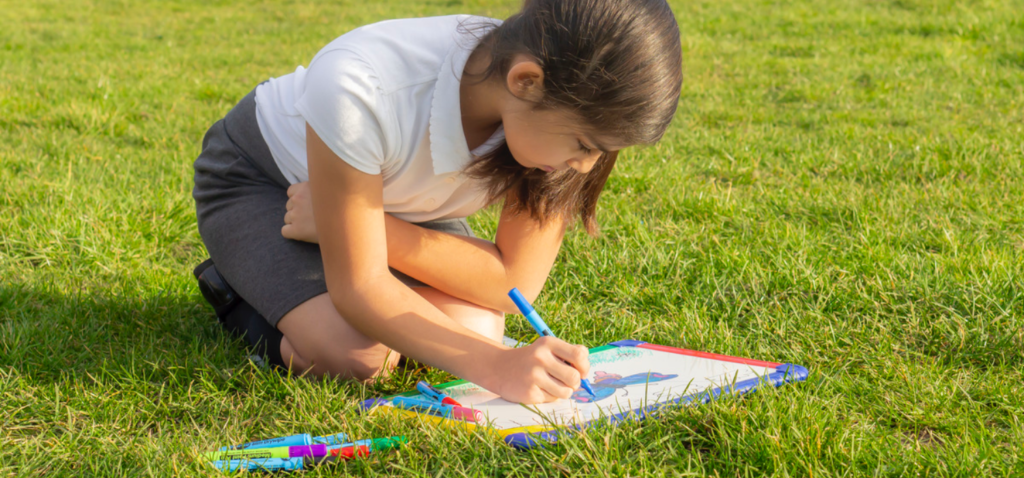
There will be More Learning in Natural Environments
Many of the actions being implemented in the strategy surround learning in natural environments. The DfE has said it will explore “opportunities to support education settings to deliver quality outdoor education”.
It has also pledged that “By 2023, we will: continue evaluating the UK’s first ‘Biophilic’ primary school, which will provide evidence of the impact of a greater connection to nature within the built environment, on the health and wellbeing of children and young people”.
So going forward we can expect to see more investment in creating green spaces on school land and within classrooms. We can also expect more lessons, extra-curricular activities, and school trips to take place outside and in nature.
If you’re in need of some inspiration for outdoor lessons, take a look at our article ‘Taking Learning Out Of The Classroom’ HERE.
The Curriculum will Include More Learning About the Environment
In many pre-existing subjects, we can expect to see more lessons and topics that teach students about sustainability. The strategy outlines:
“The early years foundation stage (EYFS) framework ensures that all children develop an understanding of the world and the natural environment. As they progress through primary and secondary school, children and young people continue to build on this knowledge through science, geography and citizenship programmes within the national curriculum.”
Furthermore, the strategy aims to develop a ‘Primary Science Model Curriculum’ by 2023. This includes an emphasis on nature to help children ‘understand the world around them’.
A new Natural History GCSE will launch by 2025. This will support the government’s push to prepare students for future green jobs and a more sustainable Britain.
“In studying this GCSE, young people will explore organisms and environments in more depth, gain knowledge and practical experience of fieldwork and develop a greater understanding of conservation.”
The DfE will track the impact of curriculum changes with a new annual survey. This will measure students’ climate knowledge at school leaving age.
Sustainable Changes to the Routines and Culture of Schools
The DfE’s document outlines actions focused on how schools operate. For example, it encourages schools to gather data and take positive action on food waste, monitor and report energy usage, and join initiatives that promote active travel to school, such as biking or walking. These actions all intend to have the outcome of reducing the environmental impacts of educational settings.
There will also be roles for staff and students to play in helping schools and universities be accountable and take positive action. For staff, this will be the ‘Sustainability Lead’. They will be responsible for putting climate action plans into place in their institution. The DfE has said that there will be at least one in each school. They will receive carbon literacy training in preparation for their new role.
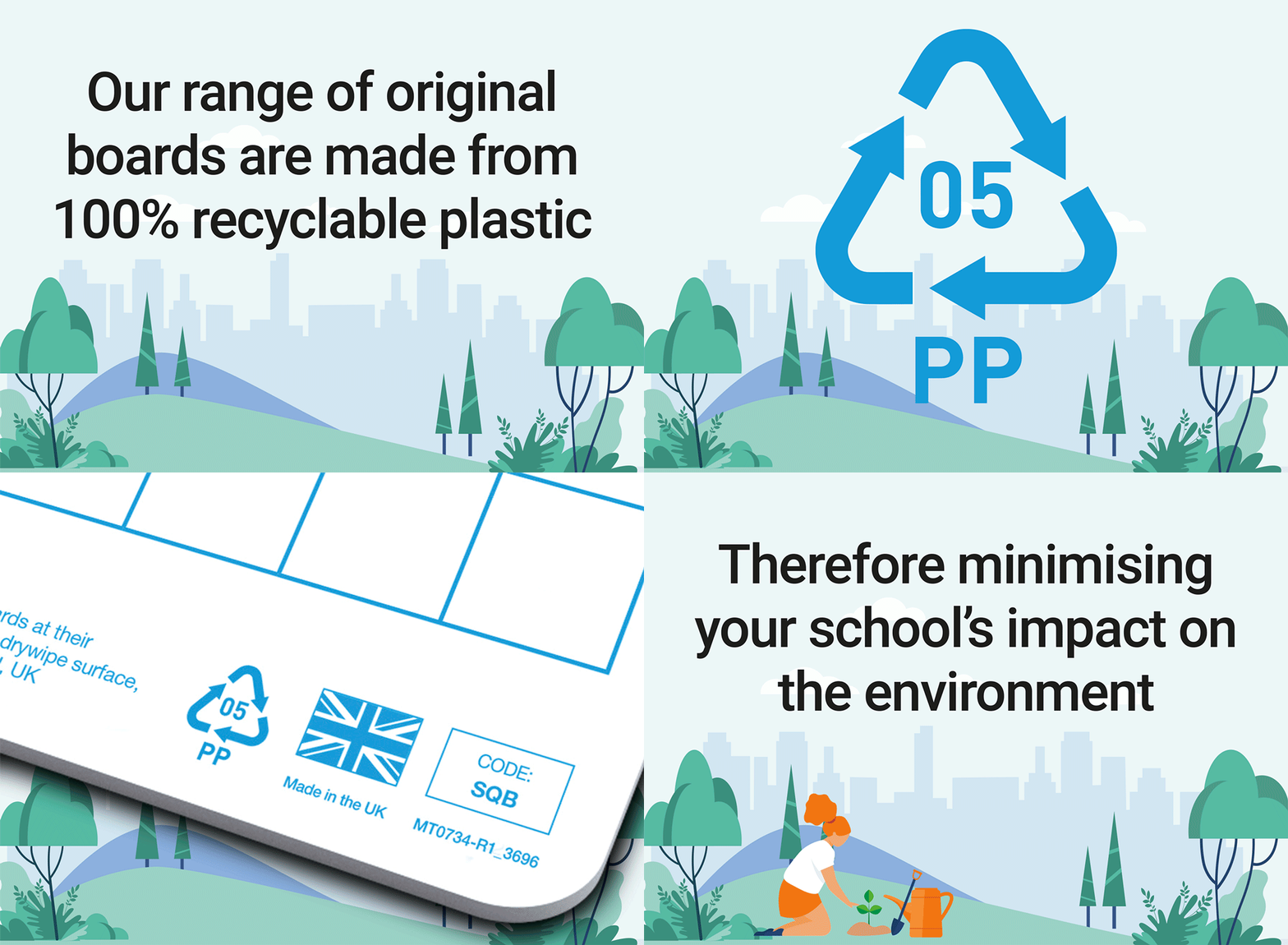
Another crucial action outlined by the DfE’s climate strategy is its aim to “eradicate single-use plastics and encourage the use of reusable and recyclable materials in schools and encourage all other education settings to match this target” by 2025.
At Show-me, we’ve been creating products with sustainability in mind for a long time already. Mini whiteboards are the most environmentally friendly method to gauge understanding without using endless reams of paper. Best of all, Show-me boards are also 100% recyclable!
In addition to our whiteboards, we’ve also recently introduced our refillable whiteboard cleaner and sachet refills. These handy cleaners keep your whiteboards super clean and can save tonnes of single-use plastic, shipping emissions and money! Learn more about “Going Green”, the refillable whiteboard cleaner story HERE.
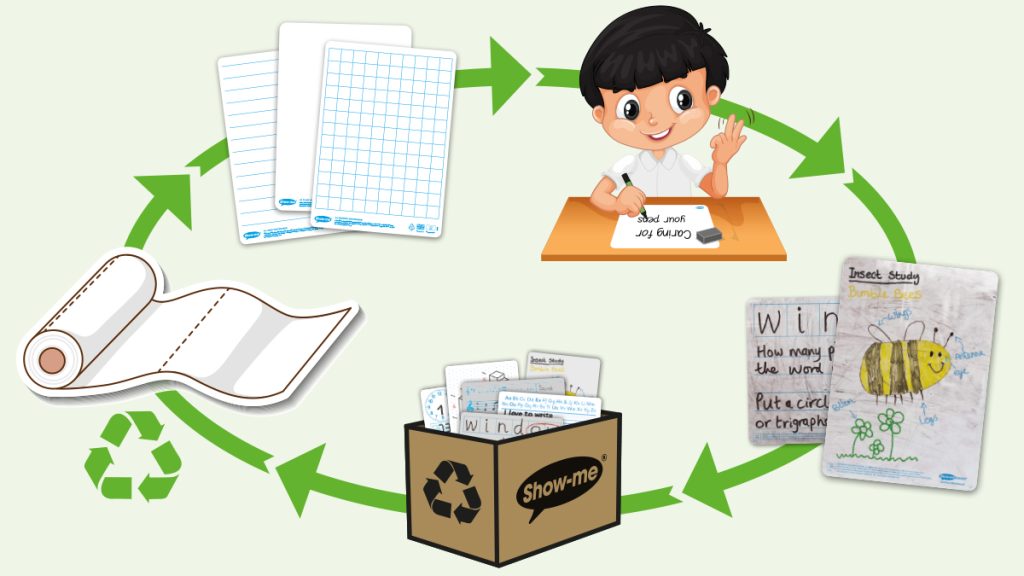
The DfE’s sustainability strategy will encourage all educational settings to promote the circular economy.
This will involve “providing guidance to reduce reliance on single-use items in favour of alternatives, such as reusable nappies. As well as recycled materials, second-hand uniforms and other consumables, such as sustainable cutlery and cleaning products”
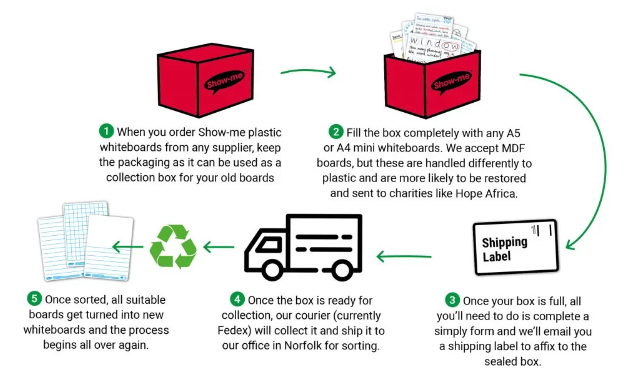
At Show-me, we’re massively in favour of supporting the circular economy, that’s why we’ve created our mini whiteboard recycling scheme.
Our free ‘send-back’ scheme recycles all mini whiteboards*, whiteboard pens and whiteboard erasers.
Find out more about the ways we at Show-me are improving our products’ environmental impact in our Help Centre HERE.
This blog was refreshed on 19/06/2025.